
Dermatology tips

Senior skin health, explained plainly.

With more than 20 years in senior dermatology, we've learned that most serious skin problems in long-term care start small and preventable. Here's what residents, families, and clinical teams can do about them.

Why it matters

Aging skin is thinner, drier, and far less forgiving.

With age, the skin loses thickness, oil production, elasticity, and immune surveillance. That combination makes older adults more prone to dryness and itching, more prone to tears and infection, and dramatically more prone to skin cancer after a lifetime of sun exposure.

The good news is that most of it is preventable or catchable early. Routine skin checks, a simple daily moisturizing routine, and quick access to a dermatology provider turn what could become a hospitalization into a fifteen-minute bedside visit.

Caregiver gently holding an older adult's hands during a skin care visit

Everyday care

Eight habits that prevent most senior skin problems.

Moisturize every single day

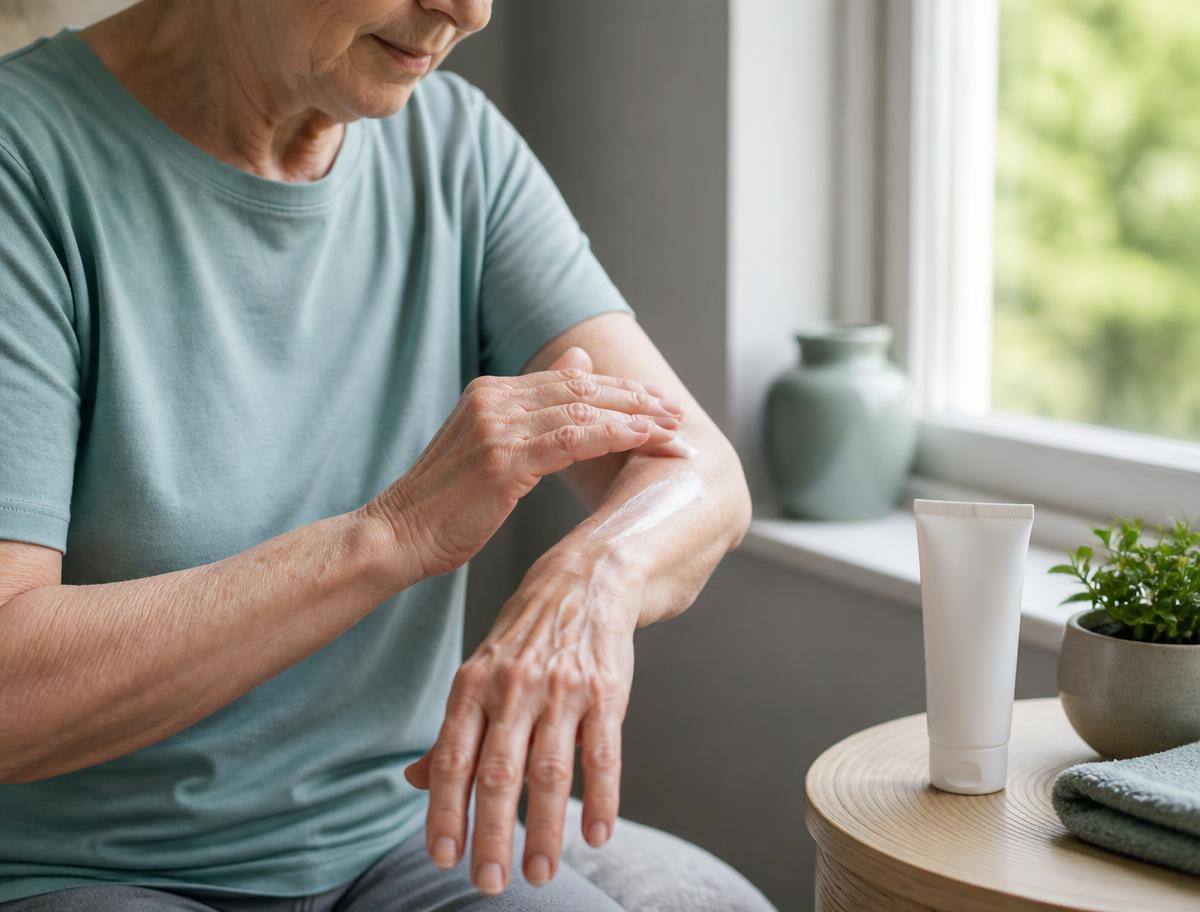
Aging skin produces less oil, which leads to dryness, itching, and cracking. Apply a thick, fragrance-free, hypoallergenic moisturizer (CeraVe, Cetaphil, Eucerin, or plain petrolatum) twice daily — and always within three minutes of bathing, while skin is still damp, to lock moisture in and reduce skin tears.

Protect against sun damage — indoors too

Decades of cumulative sun exposure make seniors the highest-risk group for skin cancer. Use a broad-spectrum SPF 30+ on the face, ears, scalp, neck, and hands, including near sunny windows and in courtyards, and add a wide-brim hat and long sleeves for outdoor activities.

Keep skin clean, and keep folds dry

Use mild, non-soap cleansers and lukewarm (not hot) water so you don't strip natural oils. Pat dry rather than rub, and pay special attention to under the breasts, the groin, the abdominal folds, and between toes, where trapped moisture invites yeast and fungal infection.

Inspect the skin regularly

Check monthly for new, growing, bleeding, or changing spots. Ask a caregiver to check the back, scalp, and behind the ears. Anything that itches, bleeds, or refuses to heal after four weeks deserves a professional look — early skin cancers are almost always highly treatable.

Stay hydrated

Adequate fluid intake supports skin elasticity and healing (unless fluids are medically restricted). Dehydration worsens dryness, itching, and infection risk, and it's common in older adults whose thirst signals have blunted.

Break the itch–scratch cycle

Scratching fragile skin causes tears and opens the door to infection. Keep nails trimmed short, use cool compresses, switch to unscented laundry detergent, and ask about a topical treatment rather than living with the itch.

Eat for skin repair

Protein, vitamins A, C, and E, zinc, and omega-3 fatty acids all support skin integrity and healing. Poor intake shows up on the skin first — as thinning, bruising, and slow repair.

Manage the conditions underneath

Diabetes, venous insufficiency, thyroid disease, kidney disease, and poor circulation all change how skin behaves. Controlling them is skin care, and unexplained itching can sometimes be the first clue that something systemic needs attention.

Know what you're looking at

The conditions we see most in skilled nursing and assisted living.

Xerosis and eczematous dermatitis

The most common cause of relentless itching in senior living. It responds well to a consistent emollient routine and, when needed, a short course of prescription topicals — but it's frequently mistaken for something else and treated with the wrong product for months.

Scabies and infestations

In close-quarters communities a single missed case can become a building-wide outbreak. Suspect it when several residents on a unit have severe nighttime itching, or when a caregiver starts itching too. Early confirmation and coordinated treatment stop it fast.

Skin cancers and precancers

Actinic keratoses, basal cell carcinoma, squamous cell carcinoma, and melanoma are all far more common with age. A pearly bump, a scaly patch that keeps coming back, a sore that won't heal, or a mole that's changing should always be evaluated.

Non-healing sores — a dermatology second look

We do not provide wound care and we do not replace your community's wound team. We work alongside them as another set of specialty eyes: distinguishing dermatologic conditions from pressure-related injury and flagging when a non-healing wound may in fact be a skin cancer, an atypical infection, or an inflammatory skin disease.

Drug eruptions

Older adults are on more medications, and a new widespread rash within days to weeks of a medication change is a drug reaction until proven otherwise. Identifying the culprit quickly prevents a much more serious reaction.

Shingles (herpes zoster)

A painful, one-sided, banded rash needs same-day attention — antivirals work best within 72 hours of onset, and prompt treatment meaningfully reduces the risk of lasting nerve pain.

When to ask for us

Six things worth a dermatology evaluation right away.

If any of these show up, ask the Director of Nursing or unit nurse to add the resident to the next dermatology round. Families are welcome to ask too.

  • A sore, scab, or ulcer that hasn't healed in four weeks
  • A spot that bleeds easily, itches persistently, or is growing or changing color
  • A new painful, blistering rash on one side of the body
  • Rapidly spreading redness with warmth, swelling, or fever
  • Severe itching that disrupts sleep, especially if more than one resident is affected
  • Any new rash that appears after a medication change

This page is general education and is not a substitute for medical advice, diagnosis, or treatment. Always consult the resident's clinical team about their specific situation.

Want this education delivered to your team?

Our partner communities receive in-service staff training on skin health, prevention, and infection control alongside recurring bedside dermatology rounds.